
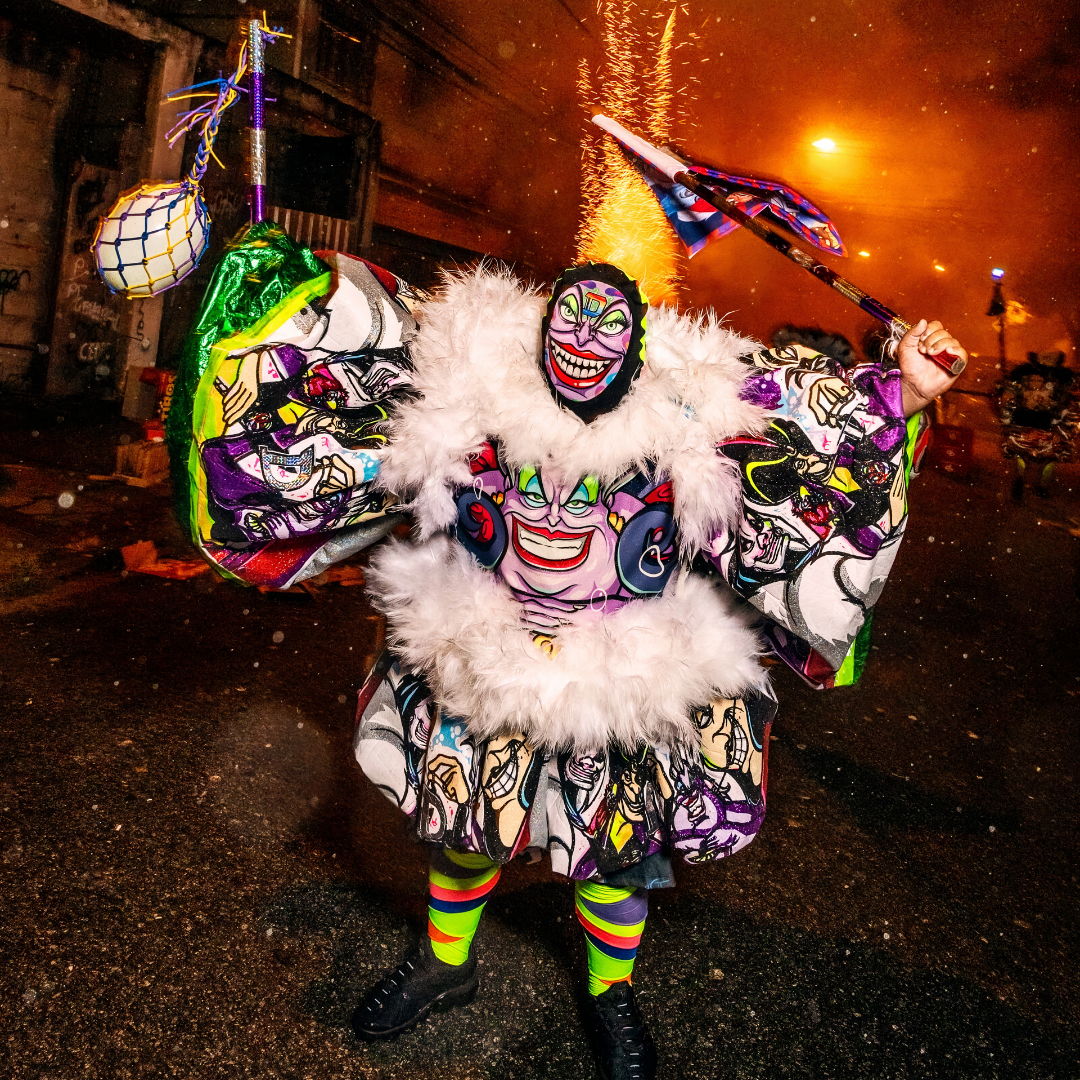
Carnival in Brazil usually conjures the same images. Feathers, sequins, samba, beaches, sun, the famous parade familiar to anyone who's seen a children's movie set in Rio de Janeiro. Gorgeous, loud, and safe.
But in the suburbs of Brazilian cities, Carnival has another face. Less photogenic. A lot more interesting.
Before the Parade, There Was Entrudo
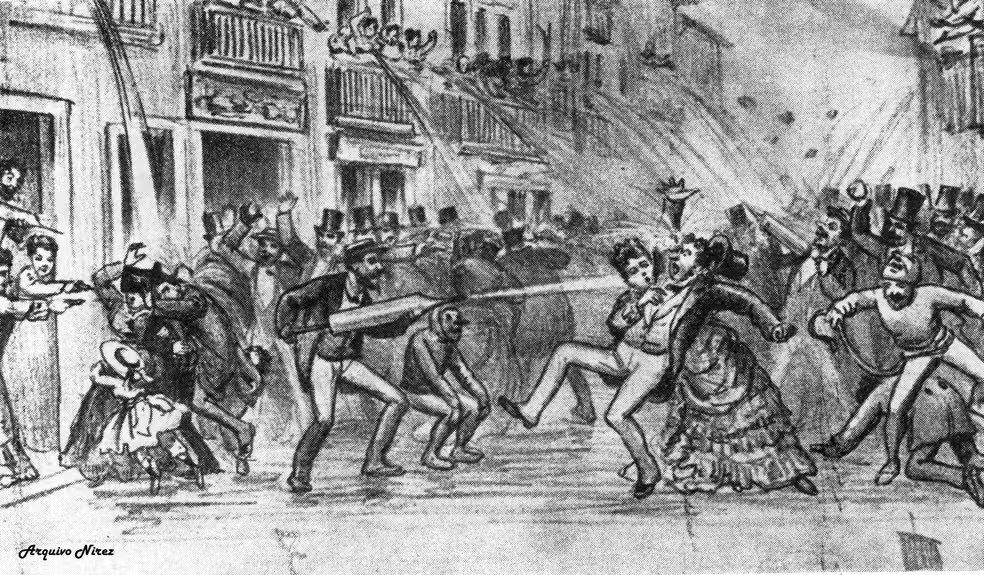
Long before samba schools and television broadcasts turned Carnival into a spectacle, Brazil had something called entrudo, brought over by the Portuguese during colonization. Entrudo was a festival of misrule. People doused each other with water, flour, mud, whatever was at hand. It was noisy, unruly, and dark, shaped by older European traditions of inversion and excess, where the lines between social classes blurred for a few wild days a year.
Like most colonial practices considered too unruly for polite society, entrudo was eventually banned. But it never fully disappeared. It just changed shape, and its bones are still visible in the street parties Brazilians call blocos, where people sing, drink, and march together through the streets, a tradition that continues in cities across Brazil today.
Bate-Bola: The Masked Figures Who Haunted Carnival Streets
This is the part of Carnival folklore that doesn't make it into any tourist brochure.
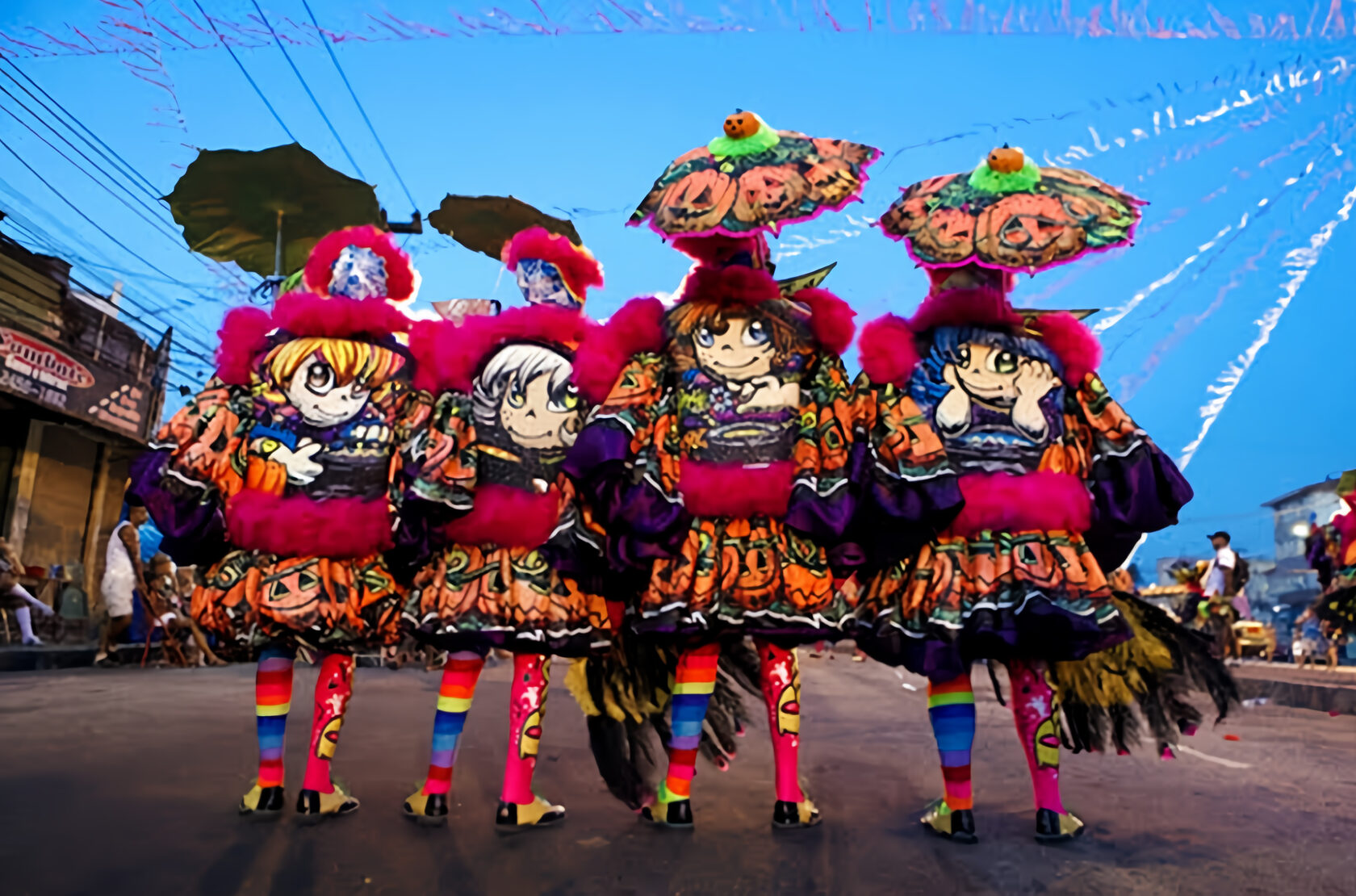
In the suburbs of Rio de Janeiro, masked figures known as bate-bola come out during Carnival dressed in eerie costumes and masks. The name varies by region, sometimes shortened or altered locally, but bate-bola is the proper term. Picture a Venetian carnival mask, then imagine it darker. Because it gets darker.
Bate-bola groups carry a small ball, roughly the size and shape of an American football, tied to a stick. They chase children through the streets and slam the ball down on the ground at their feet, the gesture the tradition takes its name from: bater a bola, to hit the ball.
This piece of Brazilian folk culture rarely makes it into the postcards, but it runs deep in working-class neighborhoods. Groups spend the whole year working on their costumes so they can show up as part of the best crew on the street. They often appear in matching outfits, sometimes five, ten, even twenty people strong, and entire neighborhoods anticipate their arrival for weeks. In some regions, individual bate-bola crews are even associated with a specific perfume, so the group's scent announces them before they're seen.
Picture the scene in full. Rio gets rain even in summer, which is when Carnival happens, in February. Dark skies, narrow streets, and a crew of ten or twenty masked figures advancing in matching costumes, balls swinging from sticks, banging them against the pavement as they go.
That's not a parade. That's the opening scene of a horror story.
Carnival's Hidden Folklore Deserves to Be Told
The eerie, half-forgotten traditions sitting underneath Brazil's Carnival parades are far richer material for a story than the parade itself. Bate-bola sits at exactly that intersection: real folk practice, genuinely unsettling, and almost entirely unknown outside Brazil.
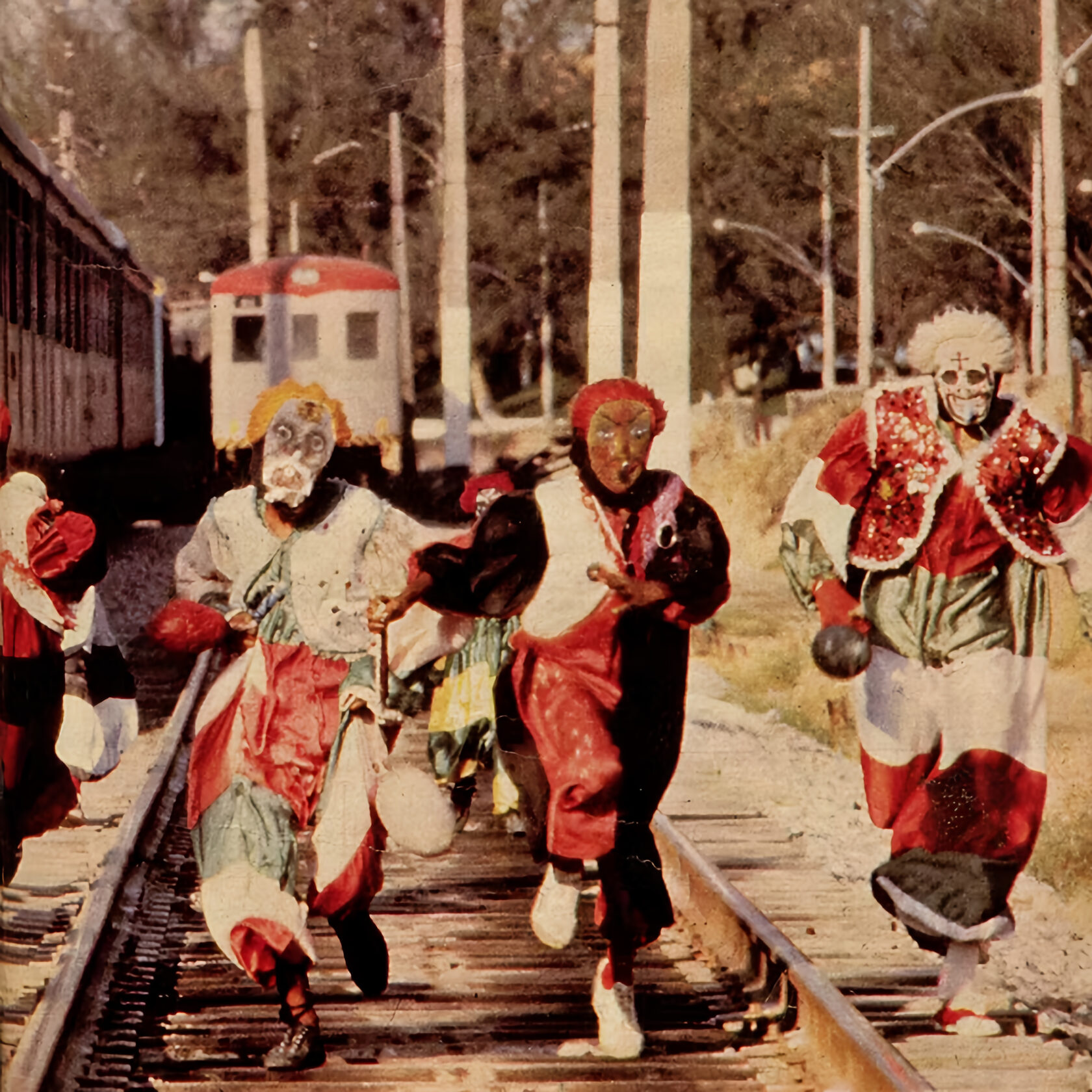
It's the kind of folklore that belongs in tropical Gothic fiction, a humid, rain-soaked Rio de Janeiro where the bate-bola play a role, possibly a supernatural one.